
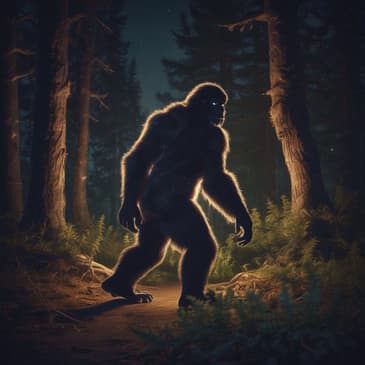
Welcome back to Tinfoil Tales! Tonight I am joined by Rich Daniels, author and researcher. Rich has been compiling a lot of the traumatic impacts of sasquatch encounters and how it affects witnesses, and he has now written a book based on his research.
Tinfoil Tales Podcast - Show Notes
Share Your Story!
- Got a paranormal encounter, conspiracy theory, or unexplained story? We want to hear it! Reach out at tinfoiltalespodcast@gmail.com or our website.
- Follow us on Facebook, and Instagram!
- Subscribe to our YouTube channel to watch the monthly livestream Tinfoil Tales: After Dark on the last Thursday of every month
- Join our Patreon community for exclusive benefits like early access and ad-free episodes.
- Join now for free or for only $1.99 a month for unlimited access.
- Visit the merch store for Tinfoil Tales stickers, shirts, hats, etc.
- Bigfoot, Brews & Spirits Too! (Sept 14, 2024): Mingle with fellow mystery lovers at Sister Lakes Brewing Company in Dowagiac, MI.
- Indiana Bigfoot Conference (Sept 27-28, 2024): Hear from experts and network at Seasons Lodge in Nashville, IN.
- ParaUnity 6 (Oct 19, 2024): Explore all things paranormal at Miami County 4H Fairgrounds in Peru, IN.
- Crawfordsville Paranormal Convention (Oct 26, 2024): Meet investigators and explore vendors in Crawfordsville, IN.
- All music for the podcast was written and performed by Devin Gowin.
- For those interested in hiring Devin, you can reach him at harmonicgray@gmail.com.
- The views expressed are those of the guests and do not reflect the podcast or host. We encourage you to think critically and form your own opinions.
Thank you for listening!
Become a supporter of this podcast: https://www.spreaker.com/podcast/tinfoil-tales--6147818/support.
Want to be a Guest?
If you have a paranormal encounter, conspiracy theory, or unexplained story to share, we'd love to hear from you! Reach out to us at tinfoiltalespodcast@gmail.com or use the contact button on our website.
http://www.tinfoiltales.com
Let's schedule you for a future episode and dive into the mysteries together!
Got Weird Stuff?
Have some strange physical evidence you want to share?
Mail it to:
Tinfoil Tales
P.O. Box 302
Peru, IN 46970
📱 Follow Us on Social Media:
Stay engaged on Facebook to join the conversation.
http://www.facebook.com/tinfoiltales and look for Brandon Tinfoil Tales
Explore mysterious visuals on Instagram and share your own experiences.
https://www.instagram.com/tinfoiltalespodcast
📺 Subscribe to our YouTube Channel:
Hosted by Simplecast, an AdsWizz company. See pcm.adswizz.com for information about our collection and use of personal data for advertising.
And I just turned around and I call ass out of there. I was done. I wasn't dealing with them. The hypocrisy of the cult is one of the things that turned me away the quickest. When I turned my head lights on, it turned and looked at us. And one of the things I remember the most, where the eyes were glowing red. I see an orb of light. It is just circling these steps like it is waiting for me. And he begins to tell them that he saw a UFO. They're basically like, what are you talking about. That's seven foot up on a tree, peeking around it, and that's where I saw the top of the muzzle, nose and the eyes. As soon as I made eye contact with this thing, it don't like death. Welcome back to Tenfoil tel S. I'm your host, Brandon wrightnight We're gonna be joined by my guest, Rich Daniels. Rich has written a book kind of goes along with the impact that people have when they experience witnessing something strange like sasquatch, the traumatic events that come along with that. Did a lot of research into the topic. He's also had his own experiences when it relates to Sasquatch, So I'm definitely looking forward to talking with him, but before we bring him on, if you've ever had an experience you want to be on an episode of Tenfoil Tels, you can send an email to Tenfoil Tales podcast at gmail dot com or go to tenfoiltales dot com to the contact section and get hold of me that way. Either way it works for me. Is to just make sure you get a message Toney, we'll get something schedule for a future episode. You want to help the podcast out again, the best way to help the podcast is to continue to share it around. Word of mouth is the best way getting an exposure out there. New listeners of the podcast means new potential guests for the podcast. That means new episodes for you guys to listen to. If you could be kind enough to leave a five star rating and review, that does help the podcast too. If you write out a review, I'll make sure to read it and give you a shout out on an upcoming episode. You can also join the Patreon become a foil Fanatic for one to ninety nine a month less than two dollars. You get access to all the episodes early and they're all ad free, plus there will be bonus content on there. There is Crinkled Conspiracies, the Patreon exclusive. You'll only find that on Patreon. You can actually join the free membership can get access to that. If you don't want to join the Patreon there is a donate button. If you donate to the podcast, make sure to let me know. I'll give you a shout out. There is a merch store available too. Those will be included in the show notes. There's some shirts, stickers, and everything on there that you might be interested in, so make sure to check that out. There's a few events I'll be attending this fall. Starting on September fourteenth, There'll be at Bigfoots and Bruise and Spirits Too into Wadjack, Michigan at the Sister Lake Brewing Company. On September twenty seventh and twenty eighth, I'll be at the Indiana Bigfoot Convention in Nashville, Indiana. On October nineteenth, i will bee at Pair Unity six in Miami County, Indiana. And on October twenty six I'll be at Crawfordsville, Indiana for the Crawfordville pairan Noormal Convention. More information regarding those events is also included in the show notes. Make sure to follow along on social media Facebook, Instagram, X. I'm mostly on Facebook, so look up Brandon ten Foiltels. You'll see me on there. You can message me that way. Whatever it is you got to do to reach out to me, definitely appreciate it. You keep up with ten foil Tails that way too. I think now we're gonna go ahead and bring rich on. Kind of hurried up and got this episode thrown together. Just talk to him a little while back. I want to make sure I could squeeze minx. I think it's an episode that everyone will be interested in. So hope you guys enjoy it, so said bag Relax, enjoy the show. I'd like to take time to welcome my guests tonight. Thanks for coming on here and talk to me. I appreciate the opportunity of Bran and it's a lot of fun to do these kinds of things, and to get on a show of this nature is a real treat. I thank you for the invitation. Yeah, I'm not a problem. I appreciate you coming on here talking a little bit about yourself for the audience. Well, I am a bigfoot researcher. I've been doing that since two thousand and five, so I'm pushing twenty years at this now. And I got into a different kind of branch of research, one that had not too many people in the Bigfoot community end up doing. And that's that's studying the emotional psychological after effects that people have after encounters. And I started doing that kind of work in twenty sixteen, and in twenty nineteen I ended up publishing a case study to document all those after effects and all those act that people went through after their encounters. And I'm about to finish a book on the subject. It's hopefully we published within the next few weeks and have it out there. But it's, you know, all about these very real reactions people have to these these encounters that other people say don't happen there, can't, can't possibly happen. And I think it's a real interesting, really interesting uh feel to be in because if you were if all those people sitting out there wondering what it's like to actually, you know, see one of these creatures or encounter one of these creatures there, yeah, I can I can tell them. I can tell them for sure. Mm hm, did you ever have any of your own experience as it kind of pushed you down this pathway. Well, yeah, actually, my first encounter happened in January of two thousand and to be honest with you, I had no idea what I was even experiencing at that point. It was in western Maryland, and the young lady that I was dating at the time had two small children, and we found ourselves on a very warm day for January there in the foothills of the Appalachians. Was about sixty degrees that day, and we didn't want to waste a good day, so we went out for a picnic, and the picnic turned into visiting friends, which turned into, you know, going out to dinner, and you know the result was we got in late, pretty late that evening, nine or ten o'clock or so. And she lived way out and you know, way out in the movies out there, you know, I mean, the forest was about forty feet from her house, and you know, just you know, largely off the beaten path, not too many places around. We pulled up to our house and the driveways situated between her house and the woods, and the moment we got out of the car, we could hear something big moving around in the woods. And in that area, when you hear something big moving through the woods, you think black bear. And that's what I had in my head. There's a black bear out there. So she hustled their kids inside to get them ready to go to bed. And it was my job to get all the leftover dishes and food and everything from the picnic and get it inside. And with a black bear rummaging around it, don't want to leave any food in the car. And I definitely didn't want to make a second trip out there, so I tried to get everything on one trip, and I had my arms all full, and all I was able to do is get my elbow up on the hatchback of her car to try and push it down. Did that, ran inside, No big deal. A couple of minutes later, she comes downstairs, goes to the door, looks out there, just see if she can see the bear, and she sees my elbow was remarkably inefficient for the job that I had to do. And the dome light of her car is still on, and she didn't want the battery to run out because she had to go to work in the morning. That whole kind of thing so Chi, he's not dead. I'll report that to all the ladies listening, you know. I told her, okay, I'll go take care of it. And by that point my eyes had had adjusted to the to the light inside. So I went out and to the mud room there, kind of turned the light out there and turned out the exterior lights and just stared out trying to get my eyes to adjust a little bit so I could have some vision to be able to see what's going on. And that's when I realized there was more light out there than I thought, because I can't remember whether the moon was full or was it near full that night, but there was a lot of moonlight that night. Number one and number two, there was a lamp post about two hundred feet away that was there to illuminate that part of the driveway where, you know, so you don't drive off of it, So there's some ambient light out there. And after a couple of minutes, I felt pretty confident to be able to go out there and at least be able to see the thing coming. If you know, if there's a black bear coming at me, I would at least be able to zero in on a little bit. So I walk out and all the time, my I, you're on one specific point of the tree line, and that's because the whole tree line was bushes and briers, and they were pretty thick, and they rose up to it right or out where the canopy of the of the trees came down about five feet or so, except for one spot, which was about fifteen wide, where it had all been, you know, the bushes and briers had all been cleared out and trampled down and everything. That's where we went back into the woods, you know, to go hiking or take our kids back in the woods to play or whatever. And unbeknownst to me, that's where she also would take food that was about to go bad and dump it so animals could eat it. So that was I didn't realize that at the time. She told me later, but I was watching that space. So it was about fifteen feet wide, about five feet high up up to the canopy of the trees, and in my mind, I'm saying, if the bear's coming out, he's coming out there. He's not going to go through a bunch of briers trying to get to me. He's going to take the path at least resistance and go around. I mean, they're they're pretty smart, pretty smart animals. And I got the back of the car all the time watching this spot in the tree. Line pushed the hatchback down. Light goes out, and the moment I pushed that down, I could see motion. I could see movement in that space. And what kind of made me wonder immediately was that the movement wasn't across the space, and it wasn't coming out of the space. The movement was straight downward, something I really hadn't expected. And I looked at what I saw was the outline of something in that space. It was a brown kind of outline, kind of silhouette against a black background, but there was enough light for me to be able to see something there. And the first thing that entered my head was that how big the thing was. Its head was right at the top of where the canopy trees work, and it had just moved downwards, so I assume it sat down. I'm looking at a bear in my bom, but this thing's five This head's five feet in the air. And then I look and I see shoulders sticking straight out, straight out from the head, and they're wide, probably close to three feet just this massive thing, and I'm looking at that, and I'm saying, what kind of bear has shoulders like that? Because bears are are slope show up on down, and I'm looking and looking and I was like, what kind of bear is this? And then I sit there and I stare some more. Yes, excuse me, Oh, I beg your pardon. It's it's allergy. Ah h, You're all good. But I stare some more. Yeah, I stare some more, and I see knees sticking up, kind of like an odd ankles color up baseball catcher m And I says that thing. Crouchy said, what kind of bear sits like that? Bears don't sit like that at all. They either sit down on their haunches, you know, the way a dog does, or they sit down on their behinds and their feet stick out. So what kind of bear crouches? And I didn't understand it at the time, but what I was going through was an experience called cognitive dissonance, which is where you're getting input but your brain isn't wrapping around. Your brain isn't processing it. Because in my mind, I'm looking at a bear, but nothing about what I'm seeing says bear. I'm trying to figure it out. And I stare at it, and I stare at it, and it's forty feet away from me. And it was a minute or so, a little bit over a minute, and then I hear my girlfriend at the time at the door, going, what are you trying to do? Get killed? And I just kind of snapped into, you know, back into reality. There and here's this massive bear forty feet from me. I've got about twenty five feet to cover to get back to the to the house. And you know, one of the things that everybody knows is you see a bear, don't run because it'll chase you, whether it's hungry or not. That hunting reflex will just go. And so I decided to just back up, and I slowly backed up, my eyes on this thing. The whole time I made it about ten feet. It hadn't moved. So I just turned around and walked into the house. Get it the problems. She says, Did you see it? Yeah? I saw it, And at the time I didn't want to, you know, I didn't want to even discuss it because I was still trying to figure out what was going on with it, because it had been so such an odd thing. Fast forward now, and I mean we stayed up and watched, you know, make sure nothing happened, trying to check it. You know, I was going on no problems else that night. Now fast forward five years. I'm no longer with that lady. I'm with the woman that became my wife. We hadn't moved to Orlando, Florida. One of the things I deal with intermittently is insomnia. And I'm having one of those nights when I can't sleep. So at three o'clock in the morning, I'm flipping through the channels, you know, trying to find something to watch on TV, and there's a show on Bigfoot m H. And I distinctly remember saying the words out loud, this will put me to sleep. And I started watching this show, and about fifteen minutes in there's a gentleman from the state of Washington it comes on there and described what he saw. What he described was about a ninety five percent match to what I had seen five years previously in Maryland, and it just triggered that memory in me, and the moment that hit me of what I very well could have seen, a chill went down my spine. My hands started to shake. You know, I went into the bathroom to splash some water on my face, and I had all the color had drained from my face. And what I didn't realize at that time that I do now, based on the research that I do currently, was that I was going into what's called distress response. My body had sensed a threat. My mind had sensed a threat, and it reacted. And when your body gets you get into that, your body, of course releases adrenaline, so you get that energy rush. But in addition to that, your brain releases its own chemical to fire your brain up and get it ready for any kind of defense you might have to make your in confrontation. And that chemical is called cortisol. And cortisol is for the brain what adrenaline is for the buy, and it just gets you going. And all I could think about was the fact that this thing was forty feet from me. It was so huge it probably could have come over and pulled my arms out of their sockets whenever it wanted to, you know. And it was just such a brush with something like this, and that was I mean, there's nothing else it could have been. Nobody could explain it to me, you know, there's no grizzly bears and that part of the world, you know, there's definitely not there's no polar bears, there's nothing that big that's in the woods out there. The thing I was looking at probably had to weigh six or seven hundred pounds, and a big black bear out that way gets to be about three hundred and fifty maybe four hundred. The thing was massive, so in my mind, there was nothing else that could have been. And I literally walked around for about three days in this stupor. All I was thinking about was that incident over and over again. And of course, when you're talking about something that traumatized you like that, the memories are very sharp, they're vivid, and they're very detailed, and everything from that encounter kept going over and over in my head, and every time it did, I went back into this response. And anybody who's in that kind of situation has that level of stress response. Basically, you're going into a state that's very akin to ADHD. You're missing a lot of things. You're irritable, confused, easily, you know, all those traits that you have with ADHD, and just most of them come to you when you're in a stress response. And I was very lucky at the time. My wife, you know, my late wife, she saw that something was wrong. And the third day she came up to me and she said, look, what's going on. You know, you're not talking to anybody, You're not doing anything. You're you know, she said, you're stumbling through your life. What's happened? And that's at that point where I think a lot of witnesses get to and that's where what I call the words come to mind. And the words are what you use to open the subject with somebody, and they usually amount to something similar to I just don't think you're gonna believe me, trying to prepare that person for what they're about to here. And I was very lucky and that my wife didn't much care about what I was going to tell her. She cared about the impact she had seen on me, because I was nothing like it, you know, the person I usually am. And to her credit, she never ever told me whether she believed in Bigfoot or you know, any of this other stuff or like that. The thing that she's focused on was the fact that how much it had affected me, the impact that it had on me. I was very, very lucky, and that she listened, and she was there to support me and help me, and never once talked about her beliefs, but she understood was important to me and what I needed. And that was the first of my four encounters, and that's what got me on the path of doing this research now. And it's been a real interesting ride, but the last eight years having worked with the emotional psychological impact of these encounters. Mhm, did you actually get a good description like it of what you were? Actually? You know, I thought was a bear or whatever, But what would you like now look at what would you like be able to describe as features as well? I mean generally it was the size. The size was scary. You know, I'm a decent sized fellow. I'm six to two or about three hundred. I used to power left, play sports, all that kind of stuff. And when you think of something whose shoulders are wider than mine, not just wider, but so much wider than mine, you know, because it was because I knew exactly how wide that space was, so an instant estimate of how wide those shoulders were came to me. It was about three feet and that's considerable. And then when you consider that this thing is by its head is five feet off the ground, and it's crouching, it stands up, it's you know, you're talking eight feet, you know, at least in height, And it was the scariest thing I had ever experienced up until that point. And just to note that there's something out there like that was stunning. And that's what a lot of witnesses tell me when they when they talk about it, the first thing that really impacts them is the sheer size of the creature they're looking at, and just how how by seeing that this thing? If you if you think of what a baseball catch looks like, just crouched down like that, basically that's what I saw, but the scale was so much bigger, and it was just it was it was absolutely stunning to be able to see that. No, do you if you're going to guess like the high, how high do you think it actually was? My guess is somewhere between eight and nine feet crouching down like you stand up, you know, when you're crouched, your head's probably about sixty percent of your height, maybe a little bit more, and then when you stand up you get your full height. It's you know, spreading there, so somewhere in that area. I would say at least eight feet, maybe you know, closer to nine if it stretched out a little bit more pretty big, Yeah, for sure, I have a for sure it's either nine or ten. For about one of those metal yard signed ones, like the people cut out, like the shapes of the sasquat or whatever. I have those out back, and it goes all the way basically to where my it's on my barn, but it goes right to where the overhang of the barn is on the side. So if that's nine feet, you next seeing something like their masses. Well, when I when I go out and do some of these speaking engagements, there's always that cut out of the classic silhouette, you know, the Paddy silhouette, and it's usually cut out of an eight foot sheet apply and so the top of that head is eight feet. And now I usually walk over to it and compare myself to it. You know, I'm not a small guy. You know. I've been you know, described as physically intimidating by you know a number of people you know, through the years. And I stand next to that, think and I said, imagine this or even a little bit bigger and imagine number one, not expecting to ever see something like that, not even believing that it exists, and then bam, it's in front of the size alone is going to is going to scare the daylights out of it. Now, I'm six three and two thirty five, and these things, like I said, that metal cutout I have back to dwarfs me so, but it puts it into perspective because people think, wow, that's pretty big. But until you see it, until you really get you really get that scale in your mind, you don't know what big is until that point. I think that's where the trouble comes from where people believing in these things too, is because of how massive something like that is, and very few people have actually ever seen one. There's not been bodies produced or anything like that, at least not in mainstream science or whatever accepted. I think that's where the stigma comes from, is because people don't believe something that large can be that elusive. So I think that's the trouble that comes along with trying to get people that haven't had an actual encounter see it or to believe it. Yeah, I mean, they they think about it and they think, well, everything that big must be slow and lumbers everywhere, and they don't realize. Yeah that when you go through the thousands of reports, you know that I've been able to in their capabilities and it's it's incredible that they are able. They've you know, been forty feet up in trees. They you know, they hop over walls and fences and with with them without any trouble at all. And you know, they push over trees, you know, and even even if it's dead three in the woods and see you know, see how far you get. It's not that easy to do. But even especially the ones that have a little green, you know, little green still to them, and you know, their physical capabilities are immense, and you know the people they just they underestimate these creatures on every turn. M h. Yeah, there's I don't know how other like I've never actually saw one of those, so it's hard to fathom and understand it from someone that's not actually seen that. But I understand what it's like seeing something that doesn't make any sense. So I can't imagine what someone be like if they're out there and they saw something that massive. It would basically change your entire perspective of how you would rationalize things. I know, like just the sheer size of something like that. It's incomprehendible to be like seeing something like that. Yeah, it's you know, I tell people it's a reality altering, reality changing kind of event. And the nearest thing I can liken it too, would be sort of a religious experience, that same reaction that you have to it. Not that you find religion of Sasquatch or anything like that, but it's that same reveal of something you didn't see coming, you didn't understand, and that all of a sudden the answers are there, and it's it's amazingly overwhelming for people. And I've experienced it more than a few times in my ears, so I can understand where it comes from. You said that was the first encounter you had. What were some of the other ones you experienced, Well, I've had a total of four. My second encounter was in It was after I moved here to New Mexico. I continued my research, you know. That was in two thousand and nine. I continued my research from here and then in two thousand in southern Colorado, southwest Colorado. Their research area was about fifty miles outside of a town called Silverton, and they had a real interesting idea. They had this small canyon basically kind of like almost like a box canyon, but it was open. You're still open at one end. Box Canon Injury is a lot smaller. And their idea was to put somebody in a tree, you know, in a tree stand at one end of the can and then head on down. Everybody else heads on down to the other end of the canyon several miles away, and they just start walking and driving, you know, driving whatever wildlife there is towards that person in the tree stand. And you know, after corresponding with them a little bit on the Internet and everything, exchanging ideas and everything, they invited me up there, and lo and behold, I was the guest of honor and I got to be in the tree stand. And the first first I looked at this thing, it was about twelve feet off the ground. And I let no, boys, this ain't gonna work, because at that point I had, you know, I was pretty sure what these creatures could do, and twelve feet just wasn't going to make it. But it was one of those stands that you could traverse up the side of the of the tree, and I went. I went about up to about twenty five feet and that's when I finally felt a little comfortable. And once I got that done, you know, they took off. There's about eight people in their and what they did is they got down to the other end of this canyon. I believe it was about three and a half miles away down on the other end, and they just fanned out across the you know, the two faces of this canyon and I guess about fifty feet between each show them or so and so, and they just started walking in a line, and you know, it took you know, an hour area. It took a couple hours actually before I started to be able to hear anything. And I started to hear some animals moving and either there were there was at least a couple of elk that I had heard come through there, and maybe some tear or something like that. Some smaller animals that you could hear scampering around. And then, you know, after I guess into the third hour that they were doing this, I could hear something big in you know, moving through the woods and it would go for a little bit and then stop, and then go for a little bit and then stop and As it got closer, it seemed to be moving in sort of a zig zag pattern. They would go to the left one time and then back to the right the next time. And as I got closer, I could hear that it was not it was not something on four legs, it was something on two legs. It was a distinct sound of how it ran, and pretty soon it was close enough for me to start being able to hear it breathe, because I could hear that huffing kind of breathe air of breath, you know, that that breathing that it has when you've been running a little bit. And it would run and then stop and you could hear it go and you just do that stuff just loud enough to be able to hear. And then it ran one way, and from from my it went from my left to right, and then from my right back left, and it came very close to where I was. I don't know if it was under the tree I was in or one of the ones closer, but it was very close. It was just to my left, and I realized, you know, I didn't have any night vision gear or anything like that. We were just trying this out to see if it worked. I don't. I didn't. We didn't. I don't know how much success we expected. So you know, it's dark and I can't see anything and that out there, I mean, there's nothing there. I mean, you get out too that part of Colorado, you know you're you're going by starlight. And so I realized, oh I could I could at least be recording some audio, going to pull my phone out of my pocket because I was just so fascinated by listening to this thing. I hadn't prepared myself to even record anything. And I started fumbling with my phone, and I think it heard me, and then it just took off and it ran over, It ran past me to you know, past my left and took off behind me, and I couldn't hear it stop. It just kept going and we got through there and we you know, you know that everybody reached me about about forty five minutes later, and I said, you all aren't going to believe this one, and you know, explained it all to them, and we all just hunkered down and waited for first light, and we we looked around. There was there were all kinds of limbs breaking, you know, things like that, just twigs I mean where something that big had rolled through there. We couldn't find any hair samples. We did find a few partial footprints, nothing substantial though, nothing we could cast or anything, but we were fairly sure that's what we were dealing with. Was a squatch run it through there. And you know, that area that you're talking about is not far from where the recent sighting or alleged sighting of a bigfoot was by the people on that train that was up there. You know the footage you got from there. I can pretty much guarantee you that that creature was now out by the train. But there are there is activity up there, and it is reported and it's uh it was. It was definitely an adrenaline pump that night. I bet I am not one to go out looking for these things. And it's not that i've I've always said if I ever seen something, I'm going to be the idiot that chases after it, and I think I still probably would. But if it's ten feet tall and I know it's going to rip me at pieces, I don't. I really don't know how to go after try well there as I'm on live streaming on Facebook or something, so in the world can see it. They can't say it's fake at that point. If you have seen me get mingled up. Well, there's there's a saying in the big Foot community people who you know, there's people who go out there and they spend you know, years of their lives going out there and try and just set up just to see these things one time. And then they'll get in a situation out there, and then the gravity of that situation will get into they'll hear a growl or the roar or something, and then they'll go, oh, okay, we we should go. And you know, the saying is you went out there to see it, Go see it. And you know, you figure if you spend a few years scouting out a research area, getting to know that area very well and picking up the signs that they're there, and then all of a sudden, one night, one of your one of all your effort comes to fruition and you're pretty sure these things are very close to you. You can tell what direction they are, Go see it. You know, that's what we tell people. Don't don't charge at them or anything like that. Walk in that direction and see what you can see. That's what you came for. And it's it's counterintuitive because these these things scare the daylights out of you, and anybody who's not scared is lying or crazy. I did a case study documenting all those after effects, and one of the things that was very distinct to me was that there's no way to predict how you're going to react to them, your your fear response, how you do it. I mean, everybody's heard of fight or flight, you know, and there's actually five reactions like that. In addition to fight or flight. There's freeze, which a lot of people you know know about. There's another one called fawn or flop. You know. Fawning is where you close your eyes or turn away from, you know, whatever is causing you stress, and flopping is basically just you know, dropping to the ground. And then the last one is called friending, which is where somebody feels an intimate connection, some sort of intimate connection to whatever is causing that, you know, that that stress, and there's no way to predict exactly who is going to react in what way. The only thing that I found that's any kind of indicator at all is how many people have been trained for confrontational situations, and that's usually first responders. But even there, there's it's not a real big indicator. You know, sometimes it works, and you know a majority of the time it doesn't because you're talking about such an extraordinary situation. Uh. In my research, you know, I've found combat veterans that freeze in their tracks and can't move. They're paralyzed with fear. And then I've seen, you know, seventy five year old grandmas who pick up a stick and are ready to go to war, and you just there's just no way to predict. And I you know, I see it all the time on social media. People put out there, oh, if you saw a sasquatch or you saw this or you that, you know, what would you do? And there's always somebody out there popping off, well I do this, and I'd take a clear picture and I do that, and they have no idea, and it is so difficult to watch those things, and you know, you just wait for those people to get in that situations and they find out that they're in a real, you know, change your shorts kind of moment because they don't know what they're going to do, and it's that impactful of a situation. Yeah, I don't know how anyone can say how they're going to react and be realistic about it, because unless you're actually able to switch off any sort of fear, I just don't to me, even if you see like think of it as like a bear or a big cat, like a lion, you don't know how they're going to react. No one knows how these things are going to react. I'm sorry. If I was walking around and I seen a bear, I'm probably gonna be a little bit like, uh oh. It's just kind of how you go about it. So when people say they're not afraid of stuff like that, which I've said before that I wasn't afraid. I was more confused about when I saw my thing. But looking at now, like you knew what you're looking at, I think I'd have been a little bit more hesitant to get out and look at it, you know what I mean, Like it's not something I'm trying to go back and do again exactly. And you know, the the only way that improves your ability to trust how you're going to react to those things is training and experience. And you know, like I say, there's people that have a lot of training in that combat situation or in that tactical situation or something like that. Those are the people that usually do pretty well in those situations. One of the one interview I've done was with a fellow who was a police officer and he was a swat operative who did raids and stuff all the time, and even when he had his encounter, which was this thing walking into his campsite in the middle of the night, he had to get a grip on himself before he did anything because it's such an outlandish situation compared to your you know, your typical reality, and you know, but he was able to, you know, make some noise and scare the thing away, and but it was It's it's been really interesting finding out, you know, just the spectrum of reactions that people have, and you know, for anyone to say, yeah, they know exactly how they're going to react. You know, I've had four encounters, and I've reacted differently to all of them. Each one of them has been a different reactions because I've been in a different situation, a different context. And you know, even somebody who has you know, at least an expectation of going out there and you know, some expectation of encountering one of these things. It's still different, it's still very stressful. I've always wondered how, and this isn't me trying to throw shade or anything like that towards anyone. I've always wondered how you have people that have went researching for years and years and years and have never seen anything, But then you hear about people that supposedly go out all the time and they're always having these experiences and always encountering these things. Why is it? I always wonder, why is it that some people are able to have these experiences when others aren't. I know, there's really no answer to that. But again, I think that also leads back to the people being skeptical about a lot of things because I don't know if all these people are really having these experiences or they if they're really having these experiences, or if they're believing they are and there's something else going on, Like it doesn't seem to make a whole lot of sense one way or the other. Well, the you know, they a little insight I can offer you on that is experienced from my Putting My Case study Together that I published in twenty nineteen. I originally interviewed four hundred and eight people for that. And when I say interviewed, it means I talked to them once and then you know, a week or two later and got back in touch with them and talked to them about it again. At least twice. Everybody was interviewed, or just about everybody was. There a few people that refused to be reinterviewed. But when it comes down to it, I realized that I had to really work on my interviewing skills back in the day I was. I worked in the radio business for about ten years and I interviewed all kinds of people. So I figured, yeah, I know how to interview people, but asking somebody to talk and trying to really get into the you know, the validity of what they're saying is very different. So I had to study some interrogation techniques, you know, some mike. I had to get into micro expressioning things like that to really get a good idea of who I was talking to and you know what about what they were saying. Was there and a lot of people that I ended up eliminating from that process because I only kept one hundred and forty eight for the study, but a lot of people their story would change the second time I would ask them, it would get bigger and better and oh I remember this now, and oh there was this, and oh I forgot to tell you about this, And that goes counter to what the real experiences. The real experience is that you remember everything in vivid detail, I mean just meticulous detail that you that you experienced the thing, and it comes back over and over and over again. So it's not very difficult to retell the situation and to retell it in the same way every time. So that was a that was something that I saw. It's like, okay, you know that made me in the least little bit of suspicion that I had is when I would say, okay, thank you for your time at the interview, and then I wouldn't use that study or use that case for the study. So that along with personal or family history of mental or behavioral health diagnosis, were the two things that I you know, I eliminated just about all of the people that I did from that study. And that's the one that's one way to one way to figure it out. You know. Also, you know the micro expressioning if you see somebody talk to you and their eyes go really big at some point that would go wide open like that. That means I don't care what you think, this is, this is it. This is the truth. And I saw that my or expression so many times from people going through that study, and now you know, and that's one of the things that I notice a lot is uh, you know, I mean, these micro expressions are things people do unconsciously, and it's you know, it's really something to to to witness it. When you learn about these kind of things and then you see them actually do them in these interviews, it's it's incredible to do. And those are good indicators as well. Those are I mean, those are used by you know, behavioral scientists that study you know crime, you know, criminals and everything else, and it's it's a it's an amazing part of it to get into. But it's you know when I don't do that. Yeah, I mean, yeah, any anybody who's a parent has done this. You can see the body language, you can see the posture, you can see the expressions and the micro expressions and everything like that. Yeah, I mean, you know, everybody's experienced it, but you know, it's it's you know, I mean, like I got into the stress responses, I could actually see people go right back into stress response when they're telling me their stories. And I don't care what anybody tells you. I don't care what anybody says. It's next to impossible to be able to fake that. I worked in that in that field for twelve years with kids that were behavior challenged. And you talk about these kids who would go into these little you know, these little episodes, fake episodes just so they wouldn't have to do their schoolwork or something like that. You watch them, and you know, the really good ones can fake it for about ten minutes, but it's just so complex and it's just so difficult to mimic that it's you know, after you know, over a period of time, it's pretty easy to see that they're you know, they're fraying at the edges or they can't keep they know they can't keep up, you know, the act, because it's just so hard to do. You you literally go into a different state of mind and it's you know, I haven't seen anybody who's been able to do it, and I'm told by a lot of therapists that it's just impossible fake for very long. Now. You said you're writing a book and it's going to be coming out here soon. What is the title of the book going to be? The book is called Footprints in the Mind the Bigfoot Witness Experience, And I got the title from realizing that the bulk of the physical evidence that we have or Bigfoot are actually footprint casts. That's the majority of what we have there, and they've been able to discern credible, you know, footprint casts or not, But that's what everybody knows. When you think of Bigfoot, you think of those big you know those those those footprint casts. Well, I'm talking about permanent impressions on somebody's minds, things that stay with them that way. So when you think about Bigfoot making that kind of impact on somebody, those footprints are not in the ground anymore. Those footprints are through someone's mind. They can remember when where these things were, exactly what was going on. They can remember the weather, you know, whether which way the breeze was blowing in some cases, the smells you know we're there. I mean not even smells associated with the creature or anything like that. The the detail of these memories are so amazing that you know these people are there, that you can tell the impact that it's had and just like footprints in the ground, these footprints in their mind stay there and they'll forever be there. And so that's what gave me the idea for the book. And the book is really about that witness experience, what it's like to go through those experiences and you know what, Yeah, I go into you know what some of the causes are, and it sounds very sciencey, but I wrote it from the perspective of a late person. I worked twelve years as a paraprofessional in the metal behavioral health field here and that's what actually got me into the education field, was working with kids. And I was the person that was with these kids all day long, sometimes up to eight hours at a time, and I helped execute these treatment plans that we had for these kids. So we had goals and objectives for them to be able to handle different stressors and different things like that. And as we go through the days and doing things, and so I got to work a lot. I was the boots on the ground for treatment plans that were put together by therapists and doctors and the shall we say, the licensed professionals and that in that field. So I tell it from that perspective I don't talk about diagnoses because I'm not qualified to make those diagnoses. I don't say somebody you know. One of the big pet peeves I have about this stuff is that when people talk about being stressed, they immediately say the word are the term PTSD? Oh you have PTSD? Well, no you don't, because there's a wide spectrum of these stress responses, from the very mild to the very severe, which is where PTSD is. PTSD is about actual psychological damage that's done, and you know, how you have to deal with that is very different than you have to deal with something from the other end of that spectrum. So I, you know, I really try to stress the fact that you know, you say, you know you've been under acute stress or you've been in a really stressful situation, and you know you can recognize when something's impacted somebody, but none of us. I mean, there's very few people walking around that are able to make a diagnosis. And I won't do that for people. But I did help a lot of people get through these situations. I did help them get on the road to recovery from the trauma that they experienced. And it's told from that perspective somebody who actually did that kind of work, and that's the kind of approach I have signature witnesses. Now, So where will this book be available at? Is it going to be on like Amazon or it's going to be on about twelve different platforms. I'm told Amazon is going to be one of them, and it's from our Urban Book Publishers is the publishing company, and we're finalizing everything on that now. And as soon as I have that information for you, I'll be able to get it to you and you can provide it for everybody. Yeah, once you get all that information, this episode will probably be on about six to eight weeks. I try and keep about a two month ahead and start just that way. I don't have to worry about running out of episodes on my schedule. Wow, But I figured by the time this episode drops, the book should be outsail. I'll make sure to have all that information in the show notes. For anyone out there listening that would be in checking it out, they can just go to the notes and click the link and find the book. Well. I appreciate that, you know. In addition, I'll be making the rounds. I'm doing some speaking engagements this summer. One is at June first on the at the Marionette Menominee Bigfoot Convention. That's Marynette, Wisconsin. It's right on the border with northern Wisconsin and the Upper Peninsula of Michigan. And I'll be there for that one. And then on July twenty ninth, I'll actually be in Southwest England or a conference over there that's being put together. And that was that came out of nowhere. You know, a young fellow that I met, you know, a researcher and everything like putting everything together. Is that he's actually a fourteen year old kid who has put together quite the event over there with some big names and you know, doctor Jeff melderm is going to be a video video presenter, right, Sharp is going to be a banking Sharp is gonna Grigby. Rigby is going to big names are going to be at that one. And I feel to be invited to that one because this young fellow finds my research, you know, fascinating and he wanted me to be part of that. So that's going to be a new kind of experience, uh, being able to go over there and share that to a very new audience. So you know, never did I think this would take me anywhere, but it's taken me overseas this summer. Yeah, that's awesome. Well, I know there's some other conferences going on around here and stuff too, but with you having everything out there, you might want to look into one. O. There's a couple here in Indiana and there's one up in Michigan, and those are going to be in September. I don't know if they're full for guests or not, but I know I'm going to be at the both of those, so I'll all look into that. Yeah, I can send you some details about them here offline. Yeah, I appreciate that. You know, that's not far from you know, my family home ground, which is in central Ohio, so that would be that'd be nice to get out that way. So I know ones in Nashville, Indiana, and the other ones in Wadjack, Michigan, and they're they're both in September. But now I'll send you some information here once we're done recording. And it's great folks that show up to those. Yeah, there are. I think we can wrap this one up. I want to say thanks again for coming on here and talking with me, and it's been a pleasure. It's been my pleasure. You know. Again, I value the opportunity to get on and and talk with folks, and uh, you know, yours is a brand new audience for me, so I you know, I really appreciate the opportunity to come on. Thanks for the invite. Yeah, not a problem. Like I said, I saw the message in a comment last week, and I just made up that new Facebook account and I've already gotten like a lot of guests just by doing that. One thinks I've been to at this for almost two years now, and I didn't do a whole lot of promoting or any kind of social interaction. I just paid a page and just kind of went with it. But it's been growing steadily, so I'm really happy with it. Yeah. Yes, And and you know, the key thing is that you're getting you're getting the word out and people are seeing here, they're here, they're encountering new stories and there there's always new information in there. And I think it's it's fantastic. And you know, everybody who takes the you know, their their own personal time and makes their own investment and two endeavors like this, I think it's it's fantastic and you know, I try to support you know, folks like you as much as possible, you know. So that's the thing with me is I don't have any agendas or anything like that. I'm literally just here to give a place for people to share and talk about things. So now, the more information that gets out there, the better off everybody. Is. There's way too many people that keep their findings and discoveries too close to the vest, and it doesn't really do anybody any good as far as you know discerning, you know exactly what these phenomena are about, you know, and with the more the more communication of the information, the better. No, I agree with that. There's a lot of people that don't want to talk about certain things, and they have some information and they think they know everything. And then my pet peeve is the so called experts that know every single thing about these weird phenomena that happened, but yet there's no physical, scientific accepted evidence of some of the existence of these things. But yeah, people are considered experts in that field and might have you an expert on something that no one mainstream even recognizes as possible. Man, that's the hard part about this research. If you think about bigfoot research. It really became popularized about nineteen seventy or so, so a little over fifty years ago. The nature of just about all of the research that's done hasn't changed in that time period. The thing that's changed the most as far as the way bigfoot research is done has been the technology that'schoosed and that's been available. And that's about it. They go out and they use the new technology in the same old ways. And you know, my point that I'll make is that what's it gotten us in over fifty years of this. We've got to start to innovate. We've got to start doing different things. We've got to start taking a different point of view in pursuing this research. And that's part of you know, that's about what I'm doing. You know, as far as this kind of research, I only know one other person that's done anything like what I'm doing as far as in the bigfoot community. And you have to take a look at that in order to unearth the new information. When I published my study in twenty nineteen, I fully expected there to be a huge backlash and you know, a very difficult, a very difficult reaction from the bigfoot community because there always is. There's always the trolls, there's always the people that are willing to tell you no. And now this is you don't know what you're doing or you're ready to jump on it. And when I released it, I put it out there in about it. I think it was about seventeen different Facebook groups, that's where I released it. But that put it out there for folks. And then I sat back and waited, waiting for something to happen. And the amazing thing was is that I got crickets. I got nothing. There was no backlash, there was no criticism because what I had done was real science and I had produced real findings from that and documented that. You know, these responses were there, and these people were feeling this impact and everything else, and there was really nothing to cut up. It wasn't some wild story that I came up with or anything like that. It was three years of hard work and putting out all together, interviewing over four hundred people and doing all that and be able to put it together, you know, And it just goes to show if you do solid science, you do solid work in this field, you don't have to worry about, you know, the naysayers, the people that talk right off the top of their heads. If you're doing good work and you and you're producing some findings, you're putting real data out there, it makes a huge difference. Yeah, I said, that's my goal for this show was to just allow people a place to talk about what they discovered, talk about things they've encountered. I'm not here to prove or disprove anyone. That's not my agenda. I don't have any set plans for anything. Like the show's grown really big, considering it's all grassroots, so I had no expectation for anything. In some pleasantly surprised with how well the show has been doing. And like I said, I appreciate everyone that's helped out, but like for me, it's just I enjoyed doing it. I don't. I know there's some podcast out there and everything that's it's a business to them. To me, it's it's not that. It's literally I just enjoy doing it. And I can tell you right now, if there's anything you ever need, questions you have, or you know anything you want to have me on for questions and answer or whatever, feel free to contact me. I'm more than happy to talk about this subject. And share everything that I found. Now, I'll definitely have you back on here after, probably maybe in the fall. That way gives you a chance for your book to be out there and see if there's any anyone's that've reached out to anything else you've discovered since then. I'd appreciate that opportunity. That'd be great. Thanks, yeap, not a problem. I think, like I said earlier, we can go ahead and wrap this one up. But before we do, I want you to let everyone know about your book one more time and what it's called and where they can find it out. The book's title is Footprints in the Mind the Bigfoot Witness Experience Again. My name is Rich Daniels, and you'll be able to find it. It's from Urban Urban Press Publishers, and it should be on a lot of different platforms. I'm told it's going to be on Amazon, and you know, if you search for that title, you'll be able to You'll be able to find it easy enough, I believe, and hopefully we'll be out here, you know, by the end of April, and people have a chance to get a look at it over the summer. Good summer reading book. I think if you're interested in the subject, and you know, I look forward to hearing from folks. They can find me on Facebook. One of the condition that I describe people going into where they want to talk about their experience but are afraid to because of the reaction they'll get. I've named that paranormal encounter syndrome, and Paranormal Encounter Syndrome is the exact name of a Facebook page that I have that I just put it out there and I try to be you know, make it informational. I try to make it a little therapeutic, different things that are making a comfortable place for people to go on there and just view information and they don't have to participate or anything like that. And if anybody wants to contact me, they can find me on Facebook at Aeronormal Encounter Syndrome. Go Yeah, anything that you want people to be able to reach out to you just send me here in a message and then I will add all that into the show notes. So for anyone listening and wants to reach out to you, they can just go right there and I'll get you in contact with him. That'll be outstanding. Thank you so much. Yep, Well again, I appreciate you talking with me. Tonight, Rich been a pleasure, and I appreciate everyone out there listening. Hope you guys enjoyed it. But we're going to head on out of here, So thanks to Rich and thanks for listening. Remember the truth lies, and the stories we share, the connections we make, Stay curious, stay open minded. Thank you all for joining us on this journey, and until next time, keep questioning, keep seeking, and keep exploring. The EndNote. All right, everyone,